
Faith does not feel the same every day. There may be times when trusting God comes naturally, while other seasons bring questions that are harder to settle. Loss, disappointment, unanswered prayer, or an unexpected change can leave even a committed Christian wondering what to believe or how to move forward.
During these times, Christian Living Books can give readers space to think more deeply about their faith. A thoughtful book can explain biblical ideas, raise questions worth considering, and encourage readers to return to Scripture with a clearer mind. Through his Christian writing, Brother Jon explores faith and spiritual growth in ways that can help readers reflect on their own walk with God.
Why Doubt Does Not Always Mean Your Faith Is Failing

Questions are not new to the Christian life. The Bible includes people who struggled to understand what God was doing. Thomas wanted evidence of Jesus’ resurrection, while the father in Mark 9 openly admitted that he believed but still needed help with his unbelief.
Doubt can come from many places. Someone may be dealing with grief, waiting for an answer to prayer, or trying to understand a difficult part of Scripture. Others may hear an argument against Christianity that raises a question they have never considered before.
The response to doubt matters. Hiding every question may allow uncertainty to grow, while facing it can lead to deeper study and more honest prayer. Faith Building Books can help readers slow down, look closely at what they believe, and explore difficult questions without pretending that simple answers will solve everything.
What Christian Living Books Can Add to Your Daily Walk
A good Christian book should not compete with the Bible. Its value comes from helping readers understand biblical teaching and consider how it relates to everyday decisions, relationships, worries, and responsibilities. The goal should always be to point a person back toward God’s Word.
Christian Living Books can also make a difficult subject easier to approach. A reader who struggles to understand forgiveness, prayer, trust, or spiritual growth may benefit from an author who explains the subject in simple language and connects it with situations people regularly experience.
Reading can also introduce ideas a person has not considered before. The best Christian Inspirational Books do more than make someone feel encouraged for a few minutes. They give readers something meaningful to think about after the chapter is finished and encourage them to apply what they have learned.
Look for Books That Point You Back to the Bible
Not every book with a Christian label will be equally helpful. Before accepting an author’s message, look at how Scripture is being used. Are verses explained within their wider context, or are individual lines being used to support ideas that the passage itself does not clearly teach?
Strong Christian Living Books should make readers want to open the Bible for themselves. They can provide explanation and application, but readers should still check the passages being discussed. An author’s personal experience may be useful, but it should not carry the same authority as Scripture.
It is also worth looking for humility in the writing. Difficult questions deserve thoughtful treatment rather than promises that every problem has an easy answer. Books that discuss Christian spiritual disciplines can be especially useful when they connect learning with habits such as prayer, Bible reading, worship, service, and fellowship.
Let What You Read Show Up in Daily Life
It is possible to finish a chapter, close the book, and barely think about it again. Reading becomes more useful when an idea stays with you and changes something in the way you think or act. You do not have to take five lessons from every chapter. Sometimes one is enough.
If something you read connects with a struggle in your life, bring it into your prayers. A chapter about patience may remind you of a situation where you have been frustrated. One about trust may bring up a worry you have been holding onto. Faith Building Books can give you something to think about, but the real value comes from what you do with it afterward.
You can also write down anything you want to come back to. It might be a Bible verse you want to read in full, a question you still have, or something you feel you need to work on. When you return to those notes later, you can see which ideas stayed with you and where your thinking has changed.
Choose Different Books for Different Seasons of Faith
The book that helps someone at the beginning of their Christian walk may not be the one they need several years later. A new believer may want help understanding basic biblical teaching, while another person may be looking for guidance after a loss, a major decision, or a long period of spiritual discouragement.
This is why choosing Christian Living Books according to your current needs can make reading more useful. Someone struggling with uncertainty may look for Books About Trusting God, while another reader may need material about relationships, forgiveness, purpose, or understanding Scripture.
There are also times when prayer itself becomes difficult. A person may want to pray but feel unsure what to say, especially during grief or stress. Books About Prayer can offer ideas and biblical guidance that help readers return to prayer without making it feel like a performance.
Do Not Read Through Doubt Completely Alone
Books give you time to think privately, but faith was never meant to be lived entirely alone. A difficult question may become easier to understand when it is discussed with a pastor, mature Christian, mentor, or trusted friend who is willing to listen rather than rush the conversation.
You can bring questions from your reading into these discussions. Perhaps an author interpreted a passage in a way you had never heard before, or a chapter left you unsure about a particular teaching. Talking it through can help you consider another perspective and decide what deserves further study.
Christian Inspirational Books can encourage personal reflection, but real Christian community provides something a book cannot. Other believers can listen, pray with you, share what they have learned, and support you through seasons when your own faith feels less certain.
Know When a Christian Book Is Actually Helping Your Faith
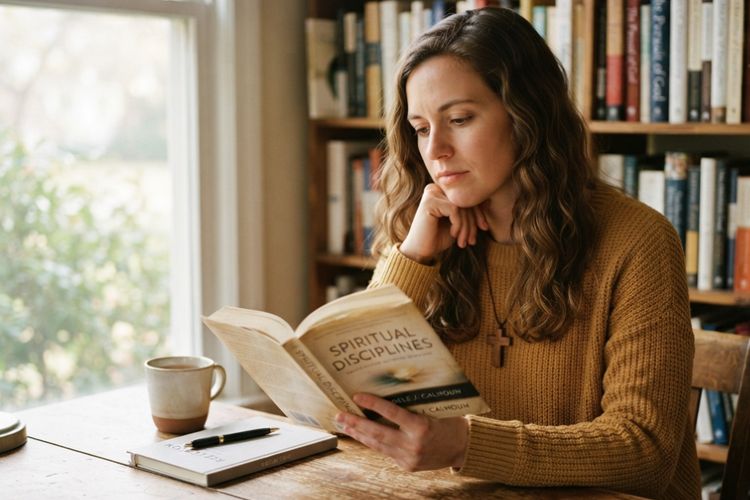
A helpful book does not need to answer every question. A better sign is whether it changes the way you approach your faith. You may find yourself checking Scripture more carefully, praying more honestly, or becoming more willing to examine why you believe something.
Good Christian Living Books can also move readers from thought to action. A lesson about patience may affect the way you respond to someone difficult. A chapter about forgiveness may lead you to address an old conflict. Teaching about generosity may make you reconsider how you use your time or resources.
Growth may happen slowly, so there is no need to rush through several books at once. Reading one chapter carefully, checking its biblical references, and putting one lesson into practice can be more valuable than finishing a book without remembering much of it.
Conclusion
Having strong faith does not mean you will always have an answer for every difficult question. Doubt and uncertainty can come at different points in life. During those times, returning to Scripture, praying honestly, and taking time to understand what you believe can help you keep moving forward.
Christian Living Books can support that process by helping you explore biblical ideas and think about how they apply to everyday life. The right book will not remove every question, but it can encourage you to keep learning, seek God through uncertain seasons, and build a faith that continues to grow.
FAQs
Can Christians have doubts and still have faith?
Yes. Having a question does not automatically mean a person has abandoned faith. Christians can bring uncertainty to God through prayer, study Scripture carefully, and seek wise guidance while they work through what is troubling them.
Should Christian books replace Bible study?
No. Christian books can explain ideas, offer perspectives, and help readers apply biblical teaching, but they should support rather than replace personal Bible reading. Scripture should remain the main source used to examine what an author teaches.
How do I choose a Christian book when I am struggling with doubt?
Start with the question that is bothering you most. Look at the author’s approach to Scripture, the subject of the book, and whether the content seriously addresses that issue rather than offering vague encouragement.
What if reading a Christian book gives me more questions?
Write those questions down instead of ignoring them. Check the biblical passages the author uses and discuss difficult points with a trusted pastor, mentor, or mature Christian who can help you explore the subject further.